By Allen Miller | Last updated: October 18, 2026
Disclosure: Some links on this page may be affiliate links. If you buy through them, we may earn a small commission at no extra cost to you.
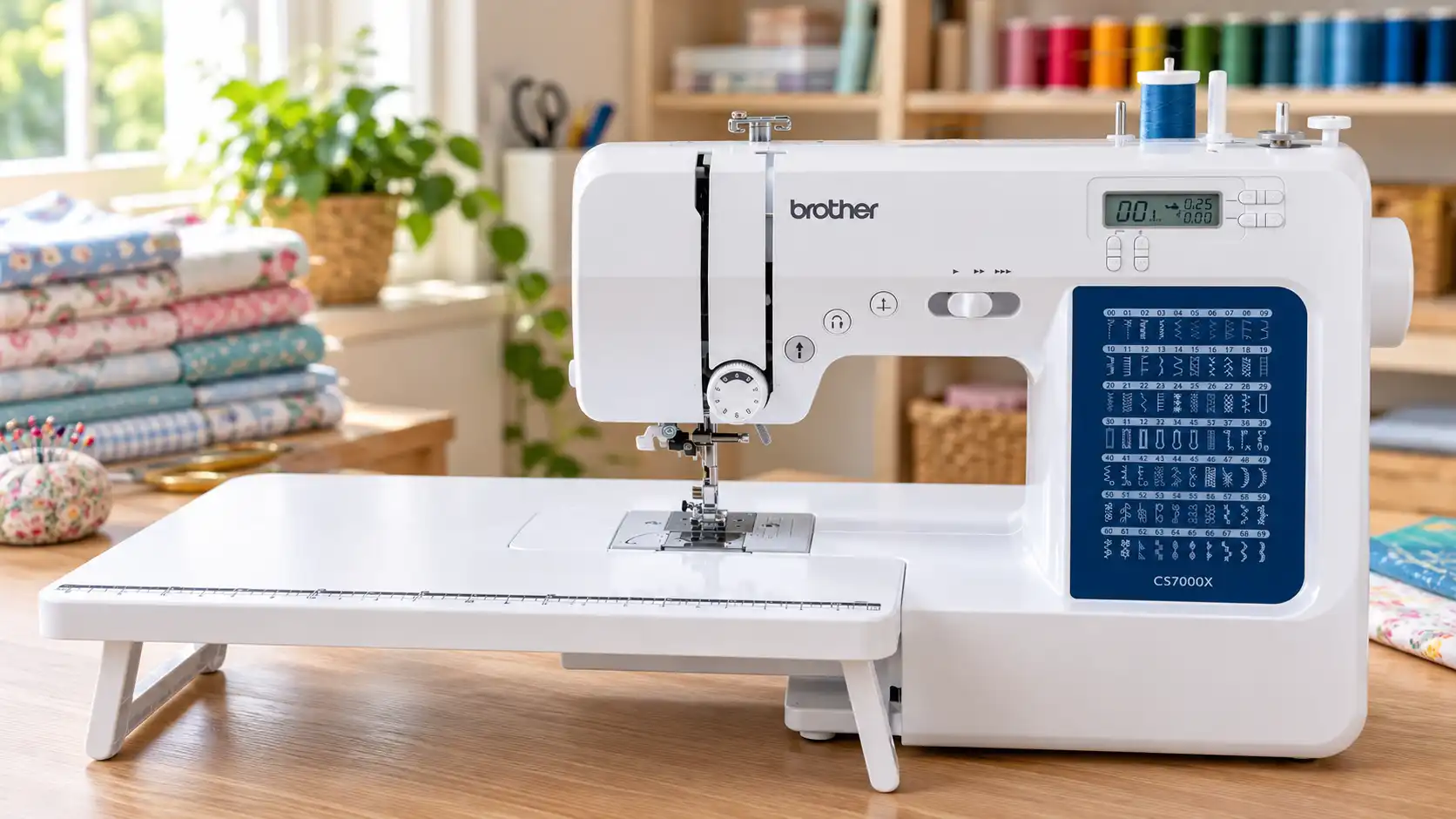
Quick verdict: The Brother CS7000X sewing machine is a versatile computerized machine for home sewists who want more stitch options, convenient controls, and useful quilting accessories without moving into an expensive professional machine. It offers 70 built-in stitches, seven one-step buttonhole styles, an automatic needle threader, adjustable speed control, and a wide extension table. However, it lacks adjustable presser-foot pressure and automatic thread cutting, and it isn’t designed to replace a dedicated heavy-duty or industrial machine.
Best for: Beginners, hobby sewists, home clothing projects, everyday alterations, patchwork, and smaller quilts.
Think twice if: Most of your sewing is heavy canvas or upholstery, you want to make bed-size quilts regularly, or you need advanced controls for demanding garment work.
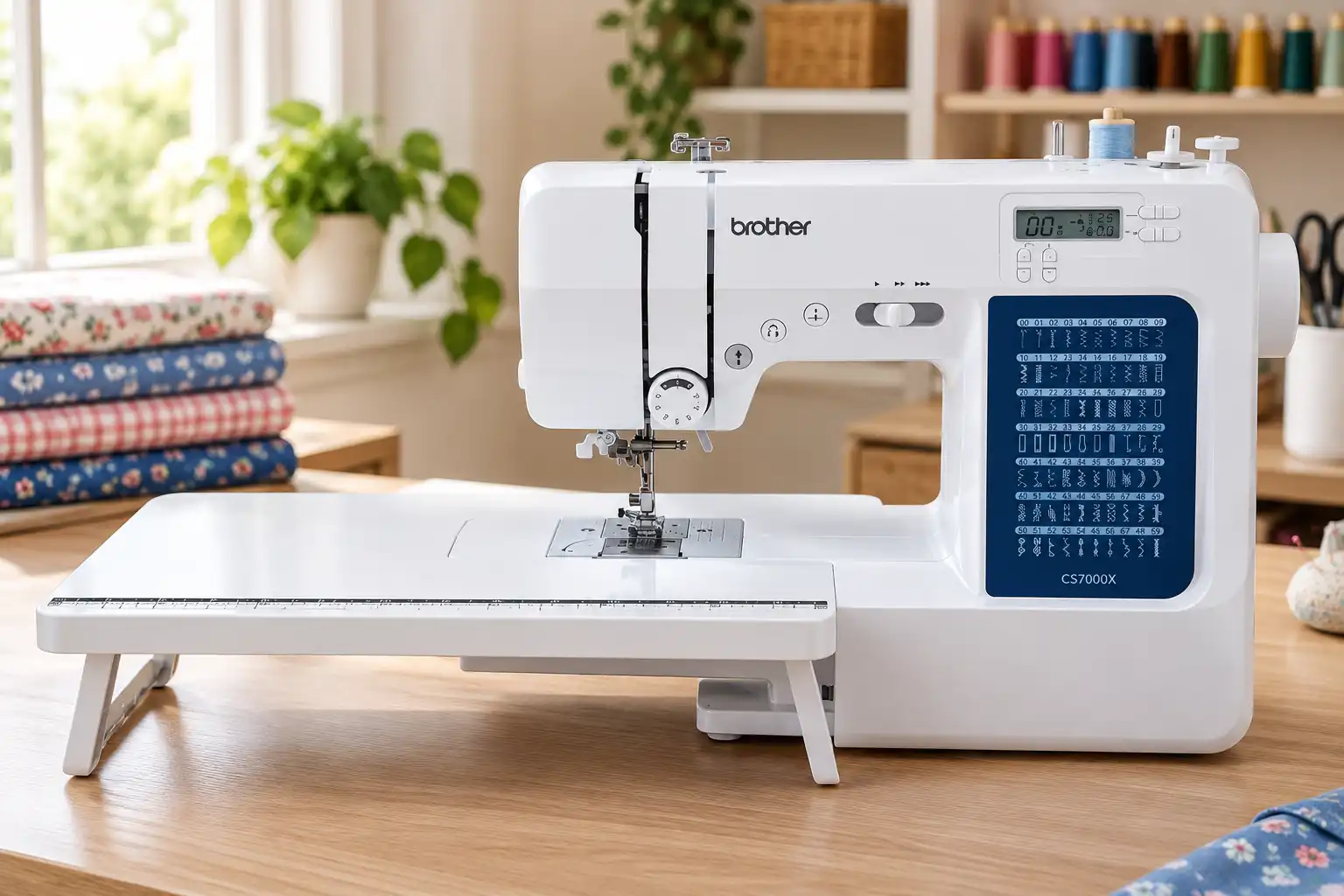
Key Takeaways
- The Brother CS7000X offers 70 built-in stitches, including decorative and quilting stitches.
- Its automatic needle threader, Quick-Set bobbin, and adjustable speed control help simplify everyday sewing.
- The included wide table, walking foot, quarter-inch foot, and quilting foot make it attractive to people who want to try quilting.
- Its main limitations are fixed presser-foot pressure, a non-backlit LCD, no automatic thread cutting, and buttonholes that can vary by fabric.
- It can handle some thick-fabric work (independent testing sewed eight layers of 12-ounce denim), but frequent heavy canvas or upholstery sewing may justify a different machine.
Why Consider the Brother CS7000X Sewing Machine?
Imagine buying your first sewing machine because you want to make clothes, repair jeans, sew cushion covers, and maybe try quilting. A basic machine seems perfectly adequate. Then you discover that you need a stretch stitch for knit fabric, a zipper foot for a new dress, or a larger working surface for a quilt.
That’s the stage the Brother CS7000X is built for. It combines computerized stitch selection, decorative stitches, practical accessories, and quilting-friendly features in one home sewing machine.
In this review, I’ll explain how I evaluated it, then cover the specifications, strengths, limitations, project suitability, and the alternatives worth comparing.
Quick next steps:
| What do you want to do? | Your next step |
| See the current price and what’s in the box | Check the CS7000X on Amazon |
| Spend less and skip the quilting accessories | See the Brother CS5055 |
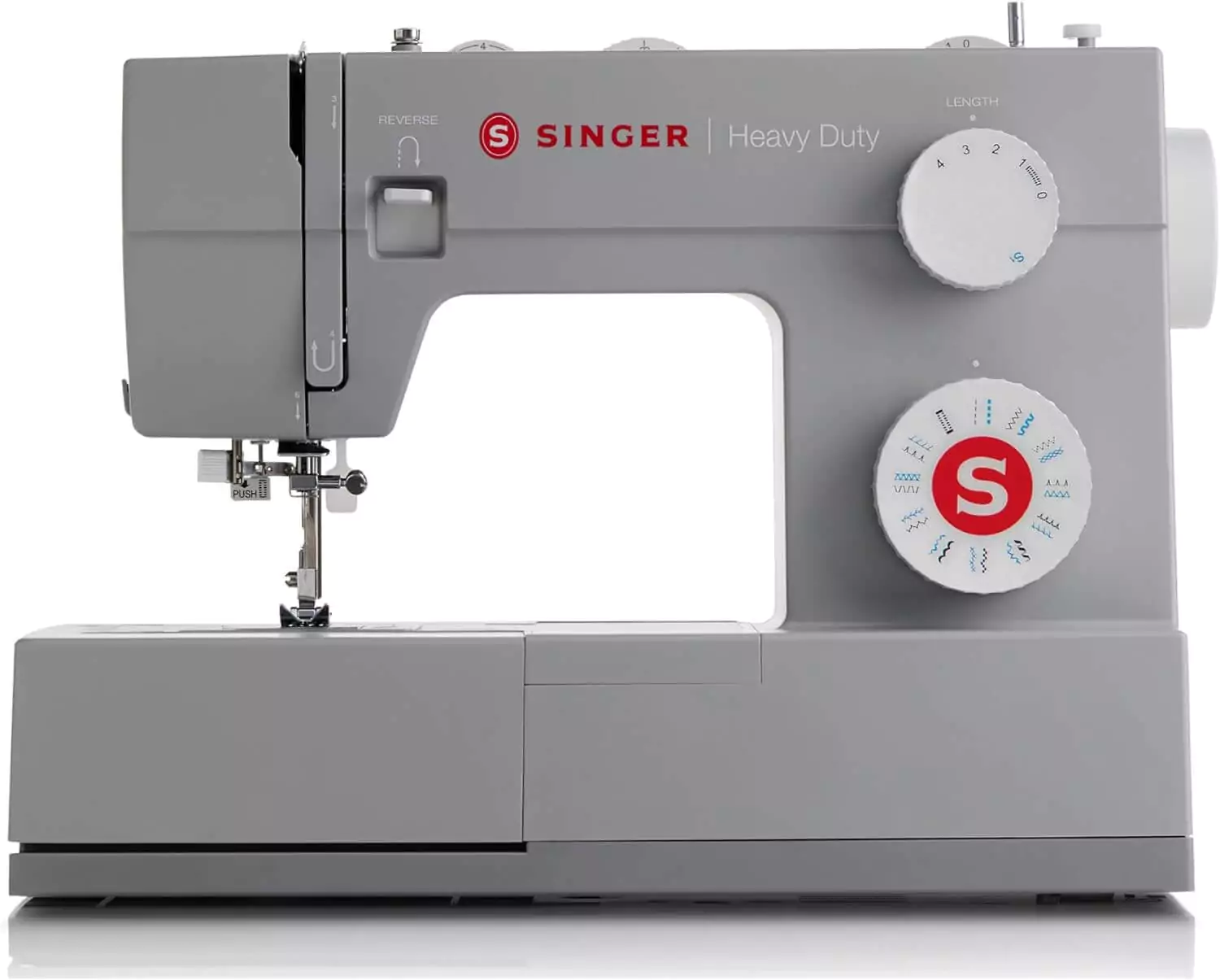
| Sew heavier fabrics more often | Read our Singer Heavy Duty 4423 review |
| Compare more machines before you decide | Browse our best sewing machines guide |
How I Evaluated the Brother CS7000X
I want to be upfront about how this review was put together. It isn’t based on my own sewing tests. My assessment draws on Brother’s official US product pages for specifications, accessories, and warranty terms, on TechGearLab’s independent test, published in 2023, for performance findings such as the denim, buttonhole, zipper, and thread-cutter observations, and on Sewing Machine Fun’s owner review, written after months of personal use, for day-to-day ownership details. Wherever I use a finding from one of them, I name and link the source.
That approach lets me tell you what the machine is documented to include and what an independent tester measured. It can’t tell you how your particular fabrics, needles, and threads will behave. For anything that depends on your materials, especially buttonholes, stretch fabrics, and thick seams, make a sample on a scrap of the real fabric before you start the project.
Prices, accessories, and warranty terms were checked on October 14, 2026, and I update this page when they change.
Brother CS7000X Sewing Machine: Specifications at a Glance
The following specifications come from Brother’s official US product information, checked on October 14, 2026.
| Feature | Brother CS7000X |
| Machine type | Computerized sewing and quilting machine |
| Built-in stitches | 70 |
| One-step buttonholes | 7 styles |
| Needle threading | Automatic |
| Bobbin system | Quick-Set drop-in bobbin |
| Speed control | Adjustable sewing-speed slider |
| Maximum sewing speed | 750 stitches per minute |
| Display | LCD screen (Brother lists adjustable brightness as “No”) |
| Free arm | Yes |
| Extension table | Wide detachable table included |
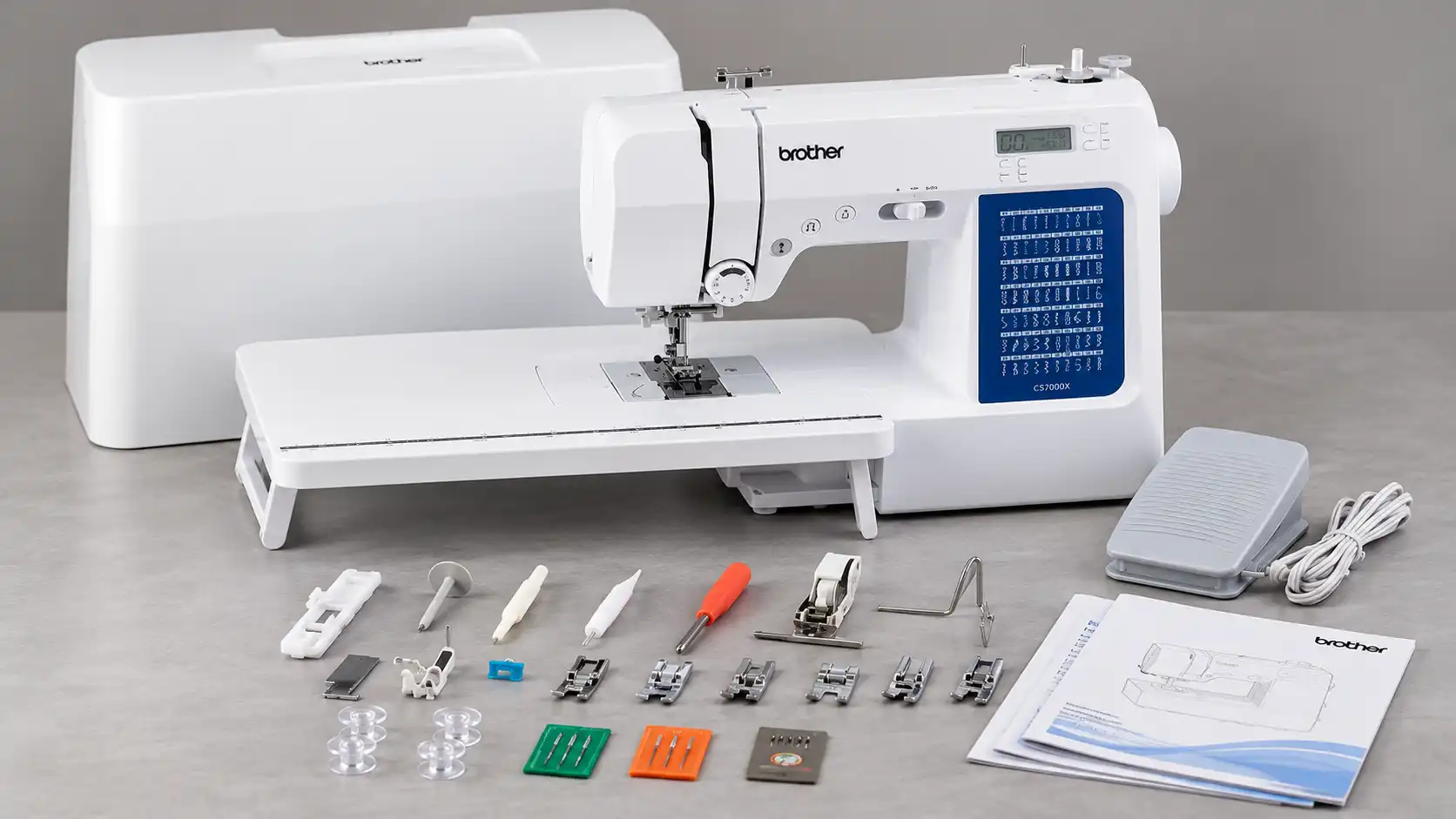
| Presser feet | 10 sewing feet listed by Brother, plus a quilt guide |
| Walking foot | Included |
| Quarter-inch foot | Included |
| Free-motion quilting | Supported (drop feed); Brother lists a free-motion quilting foot as included |
| Adjustable presser-foot pressure | No |
| Thread cutting | No automatic trimming; built-in manual cutter on the left side (per TechGearLab’s test) |
| Built-in lettering fonts | None |
| Machine weight | Approximately 10.5 lb |
| Cover | Hard protective cover included |
| Manufacturer’s US-listed price | $249.99 (original price $279.99) when checked |
| Warranty | 25-year limited warranty (US) |
Source: Brother CS7000X official product page. The thread-cutter detail comes from TechGearLab’s independent test, because Brother’s page doesn’t list it. Prices, included accessories, and warranty terms can change, so check with Brother or an authorized seller before purchase.
The specifications reveal the machine’s purpose. It’s designed for people who want one machine for several common sewing tasks rather than a specialized machine for a single job.
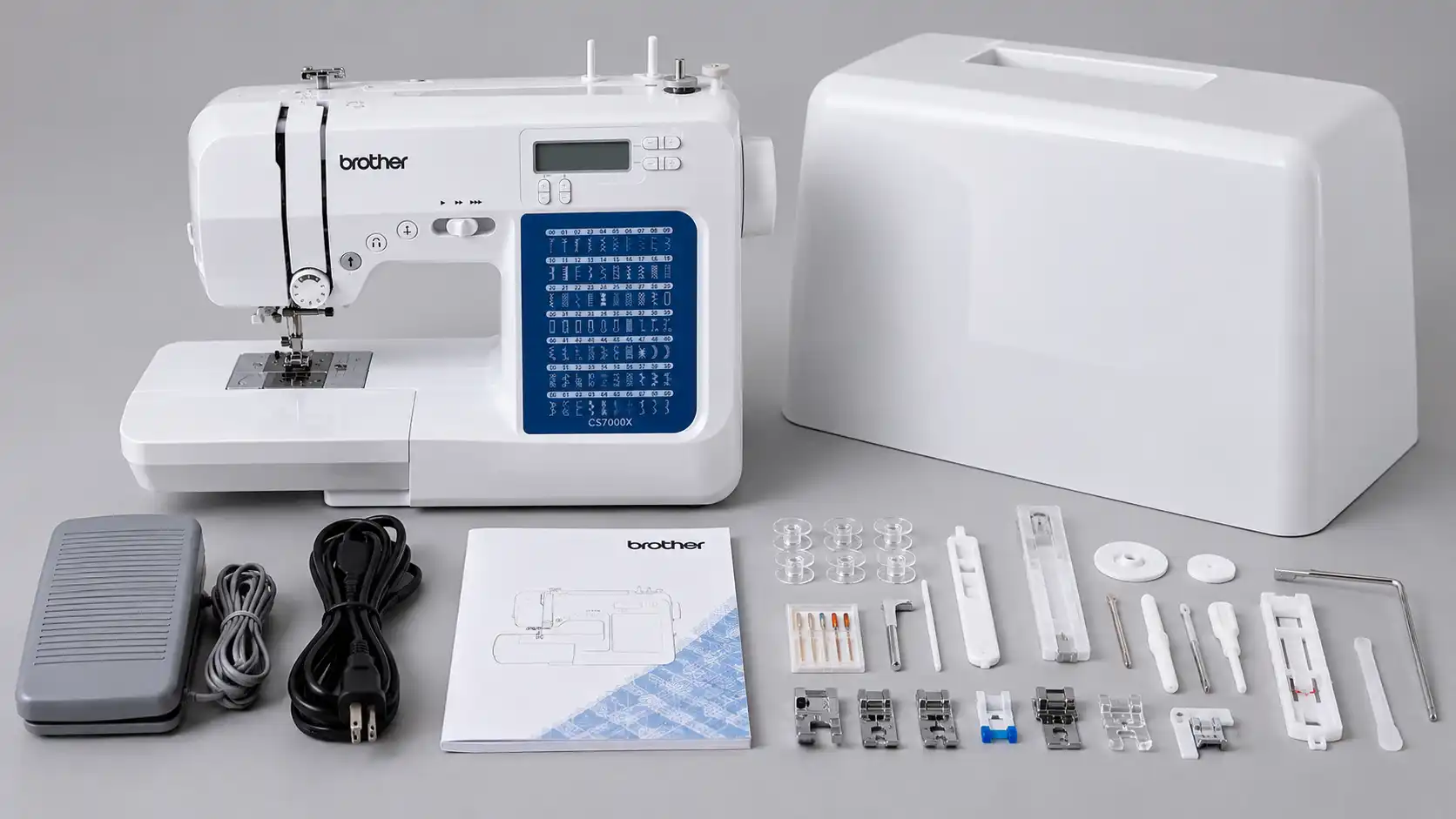
The accessory package is the main reason I’d point quilters toward this model. The box includes a walking foot, a quarter-inch foot for accurate piecing, a quilting foot, and a quilt guide (an accessory, not a presser foot), along with the wide table and a hard protective cover. Brother counts 10 sewing feet in all; the others handle zigzag stitching, buttonholes, zippers, button sewing, overcasting, blind hems, and monogramming.
One terminology note: Brother’s accessory list names a “quilting foot” without saying more, while its specifications confirm that a free-motion quilting foot is included. Check the manual to confirm which foot to attach for free-motion work.
Brother CS7000X Review: What I Like About It
1. Seventy Built-In Stitches Give You Room to Experiment
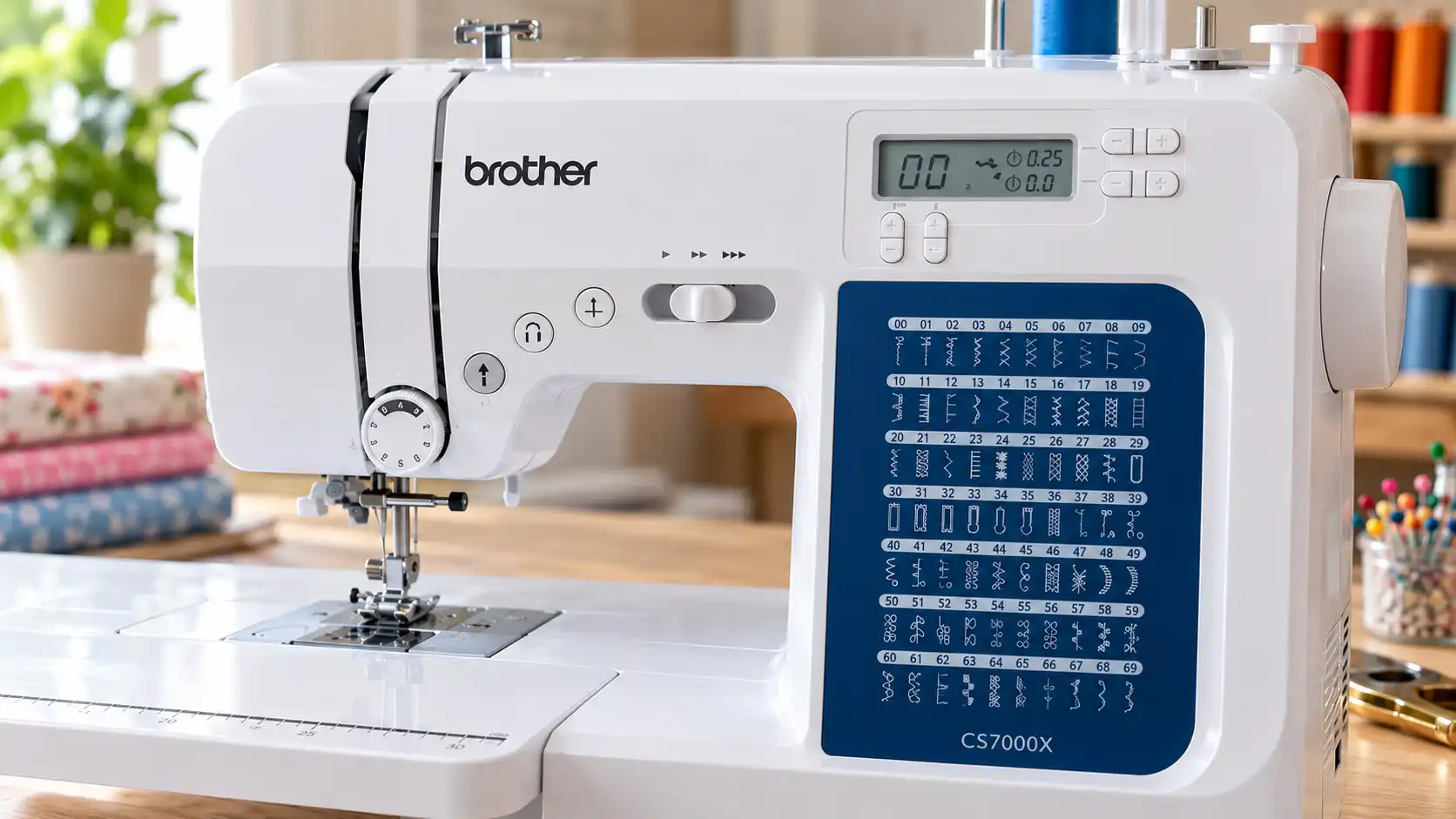
The Brother CS7000X includes 70 built-in stitches covering utility, decorative, and quilting applications, plus seven styles of one-step buttonholes. That’s well beyond the straight stitch and zigzag on a basic mechanical machine, and it’s enough range for stretch seams, finished raw edges, blind hems, and decorative details.
Most sewists lean on a small group of stitches for the bulk of their work, so the real benefit is room to grow: stretch stitches for knits, decorative stitches for home décor and gifts, and edge finishing without a serger.
TechGearLab’s independent test found the basic stitches ran at the right tension on default settings across the fabrics it tried, while zigzag, blind-hem, and scalloped stitches benefited from small top-thread tension adjustments. It also found that the triangular decorative stitch wasn’t especially crisp.
My verdict: A useful range for a home sewist who wants to grow beyond basic repairs, with the caveat that some decorative stitches can take tweaking.
2. The Automatic Needle Threader Makes Setup Easier
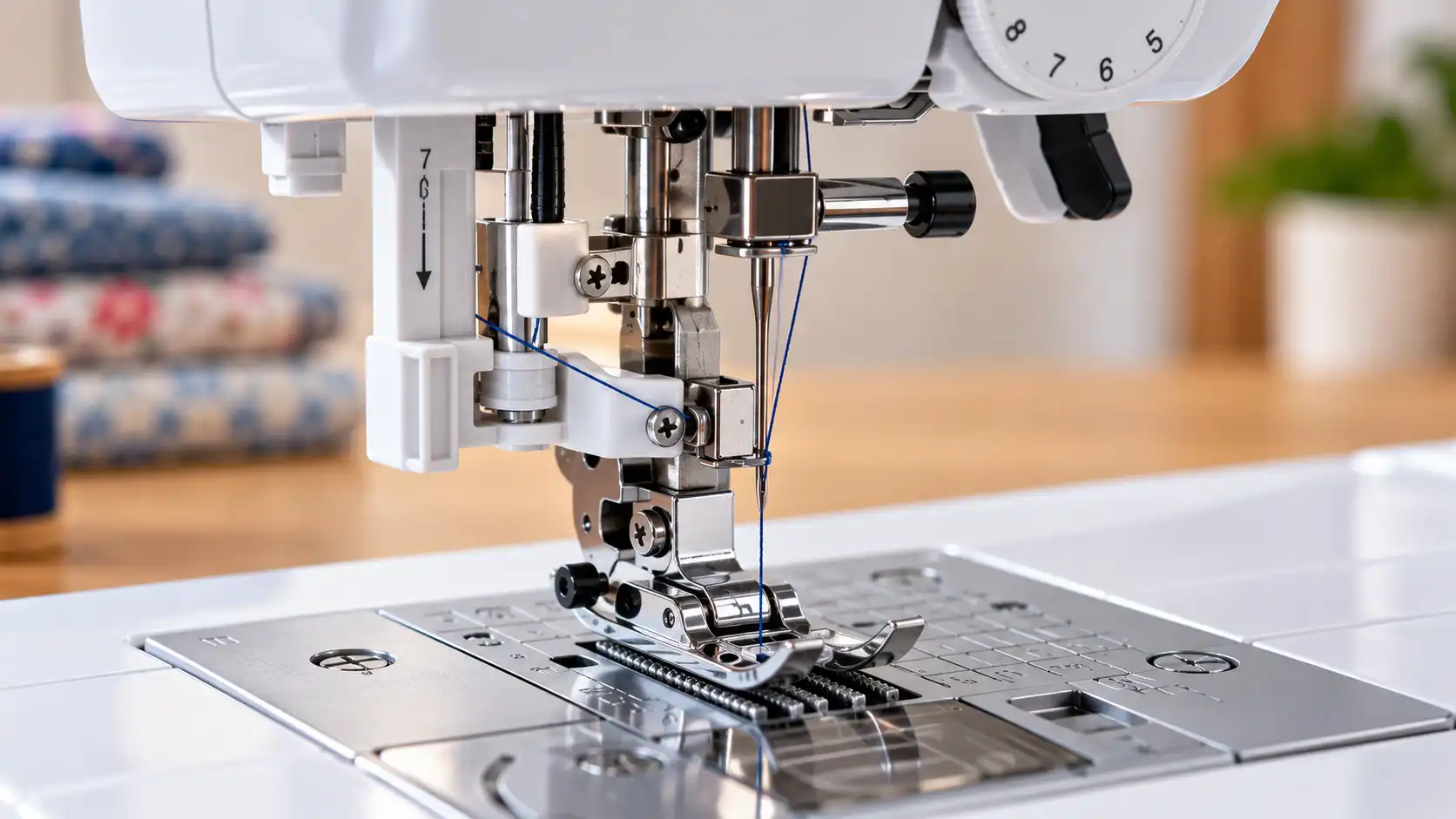
Threading a sewing machine needle can be surprisingly frustrating, especially if you’re new to sewing or struggle to see the eye of the needle. The CS7000X includes an automatic needle threader to take care of that step. You still need to route the upper thread correctly through the guides; if you don’t, the machine can still produce poor stitches.
Brother’s product page calls the threader new and higher-end without explaining what changed. The author of Sewing Machine Fun’s owner review, who used the older CS6000i for years, found the new design more durable and easier to use because its small metal hook is better protected. She also found it imperfect: she sometimes still threads by hand when that’s quicker. I’d treat it as a modest improvement rather than a deciding factor.
3. The Quick-Set Bobbin Helps Simplify Threading
The bobbin supplies the lower thread that forms stitches with the upper thread. If it’s inserted incorrectly, you can end up with tangled thread, skipped stitches, or an uneven seam. The CS7000X uses a Quick-Set drop-in bobbin, which is more straightforward than some traditional front-loading systems.
Winding is worth a little care. TechGearLab’s independent test found that the included bobbins tended to wind slightly bottom-heavy. That didn’t affect performance, but it limits how much thread you can load.
If you’re new to machine sewing, our guide on how to thread a sewing machine can help you understand the process.
4. Adjustable Speed Control Helps Beginners Stay in Control
One of the biggest challenges for a new sewist is controlling the sewing speed. If you’re sewing a straight seam and the machine is moving too quickly when you reach a corner, you can overshoot the turning point or lose your seam allowance.
The CS7000X has a speed-control slider that lets you limit the maximum sewing speed. That helps when you’re learning straight lines, following curved pattern pieces, attaching zippers, or working around small details. The slider sets the maximum speed; you still control the stitching with the foot pedal.
My verdict: Speed control is one of the machine’s most useful features for beginners and anyone who values precision over fast production.
5. The Wide Table Makes Quilting More Convenient
Quilting means joining fabric pieces and often sewing through several layers of fabric and batting. As the project grows, its weight can pull against the needle area and make it harder to guide evenly. The CS7000X comes with a detachable wide extension table to support larger pieces.
The accessories are what make it quilting-ready out of the box. The walking foot helps feed multiple layers evenly, the quarter-inch foot helps with accurate piecing, the quilt guide helps you space parallel quilting lines, and the drop feed allows free-motion quilting with the appropriate foot. In TechGearLab’s independent test, the machine produced the same stitch results through two layers of cotton muslin and two layers of batting as it did through double layers of silk, satin, and cotton jersey.
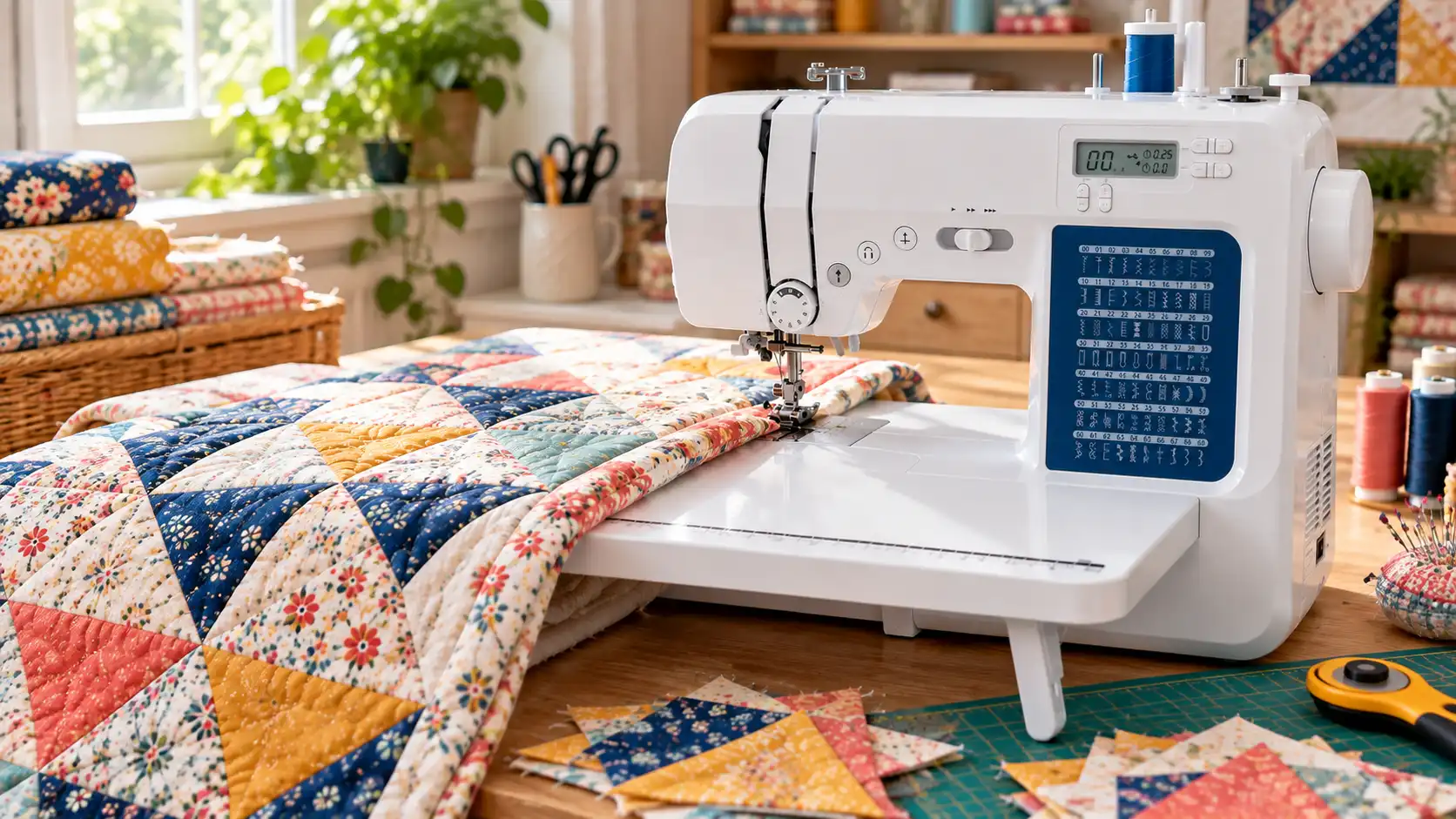
The physical limit is workspace. A wide table supports the fabric, but it doesn’t increase the distance between the needle and the machine’s body, so bulky quilts have limited room to move. Sewing Machine Fun’s owner review describes the throat space as slightly larger than on many standard machines and the drop-feed button on the back as easier than fitting a darning plate, though she often forgets the table and uses her own sewing table for bulky projects.
My verdict: A reasonable option for patchwork, smaller quilts, and home quilting projects, provided you understand the workspace limit. For more guidance, see our article on choosing a sewing machine for quilting.
6. The Free Arm Helps With Sleeves and Cuffs
Sewing a flat piece of fabric is relatively easy. Working around a narrow opening, such as a sleeve, trouser leg, or cuff, is more awkward because the fabric needs to move around the sewing area. The CS7000X has a free-arm design that makes these tasks more manageable, including hemming suitable trouser legs, sewing cuffs, and working on smaller cylindrical sections. It’s particularly useful if you plan to make or alter clothing rather than focus only on flat quilting projects.
7. It’s Relatively Quiet
Sewing Machine Fun’s owner review found it quieter than her older CS6000i, both at start-up, when the needle positions itself, and while sewing. Noise is subjective, so treat this as one owner’s impression rather than a measurement.
What Are the Disadvantages of the Brother CS7000X?
A good review should explain what a machine cannot do as clearly as what it can do. The CS7000X has several limitations worth understanding before you spend your money.
1. The LCD Screen Isn’t Backlit
The machine uses an LCD screen for computerized stitch selection. Brother lists adjustable screen brightness as “No,” and TechGearLab’s independent test describes the screen as small and unlit.
That may be inconvenient if your sewing area has poor lighting or you prefer to work in the evening. The work light illuminates the fabric near the needle (TechGearLab ranked it among its favorites), but it doesn’t help with reading the screen. If you have a well-lit sewing room, this may not matter much.
2. It Doesn’t Have Adjustable Presser-Foot Pressure
Presser-foot pressure affects how firmly the foot holds fabric against the feed dogs while the machine moves the material. Different fabrics behave differently: lightweight fabrics can pucker or shift, while stretchy fabrics may need careful handling to avoid unwanted stretching.
The CS7000X doesn’t provide adjustable presser-foot pressure, according to Brother’s specifications. For many standard projects, the fixed setting will be adequate. Sewists who frequently work with delicate fabrics, challenging knits, or a wide range of fabric thicknesses may prefer a machine with more control. This is one of the more meaningful limitations for people planning to progress into advanced garment sewing.
3. There’s No Automatic Thread-Cutting Function
An automatic thread-cutting function trims the upper and lower threads at the end of a seam when you press a button.
The Brother CS7000X has a built-in manual thread cutter, but it doesn’t automatically trim the upper and lower threads at the end of a seam. You’ll need to pull the thread to the cutter yourself or use scissors. This is a minor inconvenience for occasional sewing, although it can add repetitive steps when you’re working on many small pieces.
TechGearLab places the cutter in the middle of the left side, which it found slightly less convenient than a back-corner position but fine once you’re used to it. Don’t confuse this with the automatic needle threader; they do two entirely different jobs.
4. Buttonholes May Need Practice
The CS7000X offers seven one-step buttonhole styles. The process is convenient: you set the button size in the buttonhole foot, and the machine stitches the buttonhole and stops by itself.
The results, however, depend on the fabric. TechGearLab’s independent test found the setup easy but the output uneven. It reported decent buttonholes on cotton muslin, with mostly clean lines and nearly uniform stitches, but uneven stitches and large gaps on cotton jersey and silk. The machine also tended to jump at the start, placing stitches up to a quarter inch from the buttonhole itself.
If buttonholes matter to your projects, make a sample on the same fabric and interfacing you’ll use in the finished garment.
5. It’s Not a Dedicated Heavy-Duty Machine
Thick fabric isn’t automatically off the table. TechGearLab’s independent test reports that its tested unit sewed through eight layers of 12-ounce denim with no struggles.
The CS7000X can handle some thick-fabric projects when the needle, setup, and material are appropriate. However, bulky seam intersections and frequent work on heavy canvas or upholstery can be more demanding. If heavy materials make up most of your workload, compare machines designed specifically for that use.
Use an appropriate needle, slow down at thick intersections, and avoid forcing fabric through the machine. For a machine aimed at heavier work, read our Singer Heavy Duty 4423 review. A heavy-duty label doesn’t guarantee that every thick-fabric project will be easy, so evaluate the actual machine and your intended workload.
How Does the Brother CS7000X Perform on Different Projects?
Here’s how I’d rate the CS7000X for different kinds of work, based on its features, Brother’s specifications, and independent testing.
| Project | Suitability | What to know |
| Beginner sewing projects | Very good | Speed control and computerized stitch selection can make learning easier. |
| Everyday clothing repairs | Very good | Suitable for common repairs and alterations when the fabric is appropriate. |
| Making dresses and shirts | Good | Useful stitch selection and zipper accessories; zippers and buttonholes both take practice. |
| Stretch fabrics | Moderate to good | Choose the correct stretch stitch and needle; fixed presser-foot pressure can be limiting. |
| Denim hems and jeans | Good | Handled eight layers of 12-ounce denim in independent testing; bulky intersections still call for the right needle and a slower speed. |
| Occasional thick projects (bags, canvas) | Moderate | Workable with the correct needle and setup; go slowly at bulky seams. |
| Frequent heavy canvas and upholstery | Limited | Better served by a machine built for that workload. |
| Patchwork and small quilts | Very good | Walking foot, quarter-inch foot, and wide table are all included. |
| Table runners, placemats, baby quilts | Good | Practical sizes for the machine’s workspace. |
| Bed-size quilts | Limited to moderate | Possible, but the bulk is awkward to manage in the available space. |
| Free-motion quilting | Good for learning | Supported through the drop feed; results depend on setup and practice. |
| Embroidery with imported designs | Not suitable | It isn’t a computerized embroidery machine with a design-reading system and embroidery unit. |
These are buying recommendations based on the machine’s features and intended domestic use, not a guarantee that every fabric or project will produce identical results.
Is the Brother CS7000X Good for Making Clothes?
Yes, it can be a sensible choice for home garment sewing. The machine offers straight and zigzag stitching, additional utility stitches, a free arm, and a zipper foot, which cover many of the basic tasks involved in making shirts, dresses, skirts, simple trousers, and other everyday garments.
Zippers can take a few practice runs. TechGearLab’s independent test noted that the presser foot didn’t lift quite high enough for easy passage of the zipper pull, though with practice it produced straight seams close to the teeth.
For better results, match the needle and thread to the fabric, use a suitable stretch stitch for knits, and test stitch length and tension on a scrap before sewing the finished garment. If you plan to sew delicate or stretchy fabrics regularly, keep in mind that the fixed presser-foot pressure may become a limitation.
Can the Brother CS7000X Sew Denim?
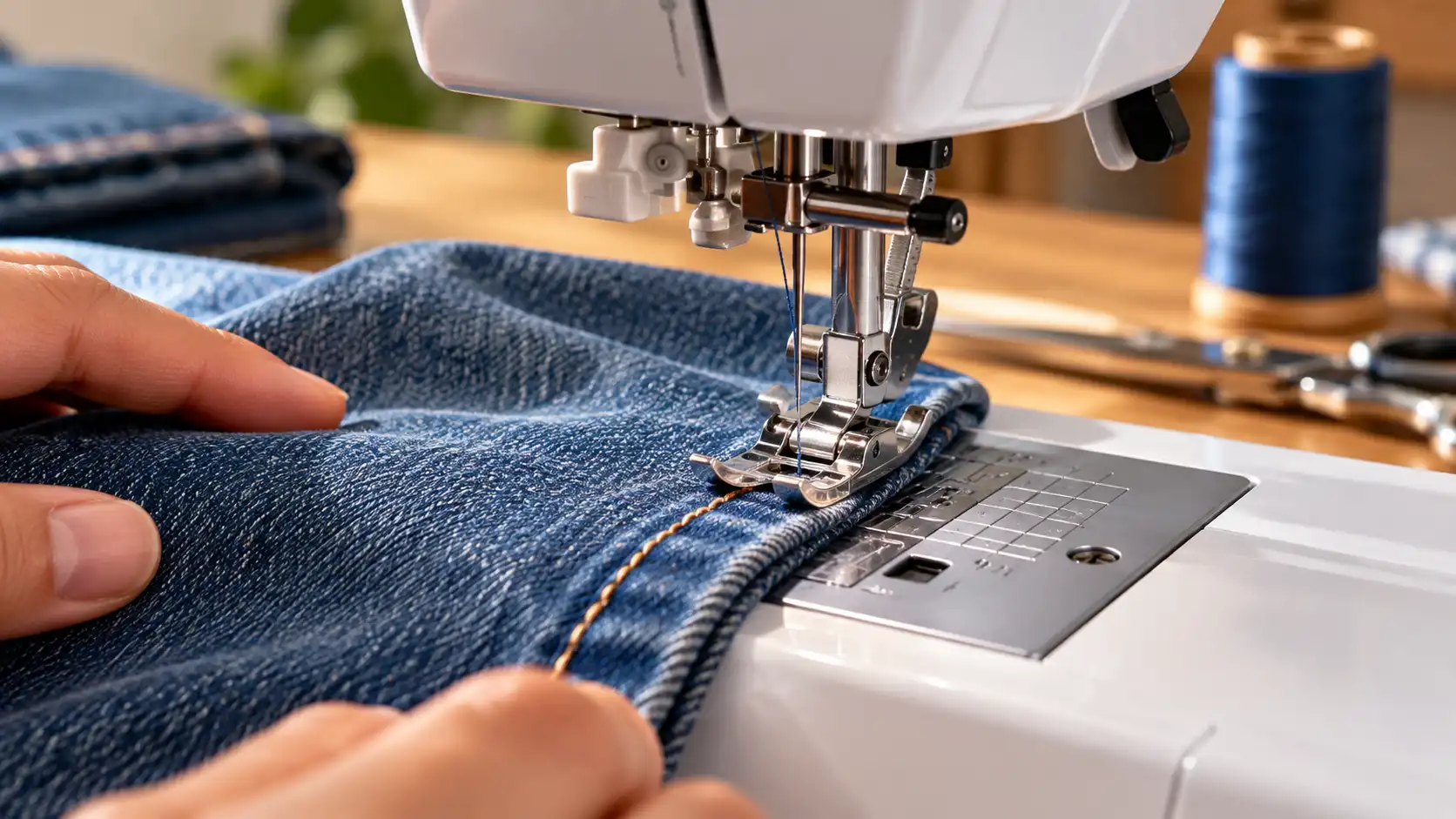
Yes, for many projects. In TechGearLab’s independent test, the machine sewed through eight layers of 12-ounce denim with no struggles. Real-world denim varies in thickness, though, and a flat seam is very different from a waistband or hem intersection where several bulky layers meet.
Use a denim needle, appropriate thread, and a slower speed when approaching thick seams. Guide the material steadily without pulling it. If the machine struggles at an intersection, stop and reassess the setup rather than forcing the needle through.
Sewing Machine Fun’s owner review frames it as workable within reason: fine for occasional thick fabric (she cites material under about 6 mm), but not for regular heavy work, where her Singer 4452 heavy-duty clearly outperforms it. For bulky seams she suggests advancing slowly and using a clearance plate or the locking pin on the presser foot to help the foot climb over the bulk.
Is the Brother CS7000X Good for Quilting?
It’s a strong candidate for beginners and hobbyists who want to try patchwork and home quilting. The walking foot, quarter-inch foot, quilt guide, and wide table are all in the box, and free-motion quilting is supported through the drop feed.
The best fit is smaller work: table runners, placemats, baby quilts, and patchwork blocks. If bed-size quilts are your main goal, our guide to the best sewing machines for quilting covers options with more room to work.
Can the Brother CS7000X Embroider Names and Designs?
Not in the way a dedicated computerized embroidery machine does. The CS7000X has decorative sewing stitches, but it doesn’t include an embroidery unit or built-in lettering fonts, and it can’t load embroidery designs and stitch them out automatically. Decorative stitches can add attractive details to fabric, but they aren’t a substitute for machine embroidery.
If adding names, logos, or detailed designs is a priority, start with our guide to the best embroidery machines.
Brother CS7000X Pros and Cons
| Pros | Cons |
| 70 built-in stitches | LCD screen isn’t backlit |
| Seven one-step buttonhole styles | Buttonhole results can vary by fabric |
| Automatic needle threader | No adjustable presser-foot pressure |
| Quick-Set bobbin system | No automatic thread-cutting function |
| Adjustable speed control | Limited workspace for bed-size quilts |
| Wide extension table | Frequent heavy canvas or upholstery work is demanding |
| Walking, quarter-inch, and quilting feet included | No built-in lettering fonts |
| Free arm for sleeves and cuffs | Doesn’t perform computerized machine embroidery |
| Hard protective cover included | Zippers took practice in independent testing |
The biggest advantage is the combination of practical sewing features and included quilting accessories. The biggest compromise is the lack of certain controls that more advanced sewists may want.
Brother CS7000X vs. Other Sewing Machines
Comparing alternatives by your actual needs makes the decision easier. Here are the three machines readers most often weigh against the CS7000X.
Brother CS7000X vs. Brother CS6000i
The CS6000i is the older sibling, and Brother’s US site now marks it as discontinued, so you’ll mostly find it from retailers, refurbished sellers, or used listings. It’s closer to the CS7000X than the name suggests: both are computerized, both include a wide table, walking foot, quilting foot, and quilt guide, and both offer seven one-step buttonhole styles.
| Feature | Brother CS7000X | Brother CS6000i |
| Built-in stitches | 70 | 60 |
| One-step buttonhole styles | 7 | 7 |
| Automatic needle threading | Yes | Yes |
| Adjustable sewing speed | Yes | Yes |
| Maximum sewing speed | 750 stitches per minute | 850 stitches per minute |
| Wide extension table | Included | Included |
| Accessory feet | 10 listed | 9 listed |
| Quarter-inch foot | Included | Not in Brother’s accessory list |
| Protective case | Hard protective cover | Hard carry case listed |
| Warranty (Brother US) | 25-year limited | 1-year limited (retailer terms vary) |
| Status on Brother’s US site | Current | Discontinued |
On paper, the CS7000X adds 10 stitches, a quarter-inch foot, and a longer manufacturer’s warranty, while the CS6000i lists a higher top speed. Brother describes the CS7000X’s needle threader as newer and higher-end but doesn’t spell out what changed. The lower top speed on the CS7000X surprised some owners: the author of Sewing Machine Fun’s owner review checked with Brother support twice that 750 is correct, not a typo, and says she rarely sews at top speed and doesn’t notice the difference. Because both machines offer computerized sewing, quilting features, and a wide table, the CS7000X isn’t automatically better for every buyer.
My recommendation: Choose the CS7000X if you want a current model with Brother’s 25-year limited warranty, the quarter-inch piecing foot, and the extra stitches. A CS6000i can still make sense at a good price from a seller who clearly states the machine’s condition, included accessories, and warranty. Verify the exact machine and compare total cost.
Brother CS7000X vs. Brother CS5055
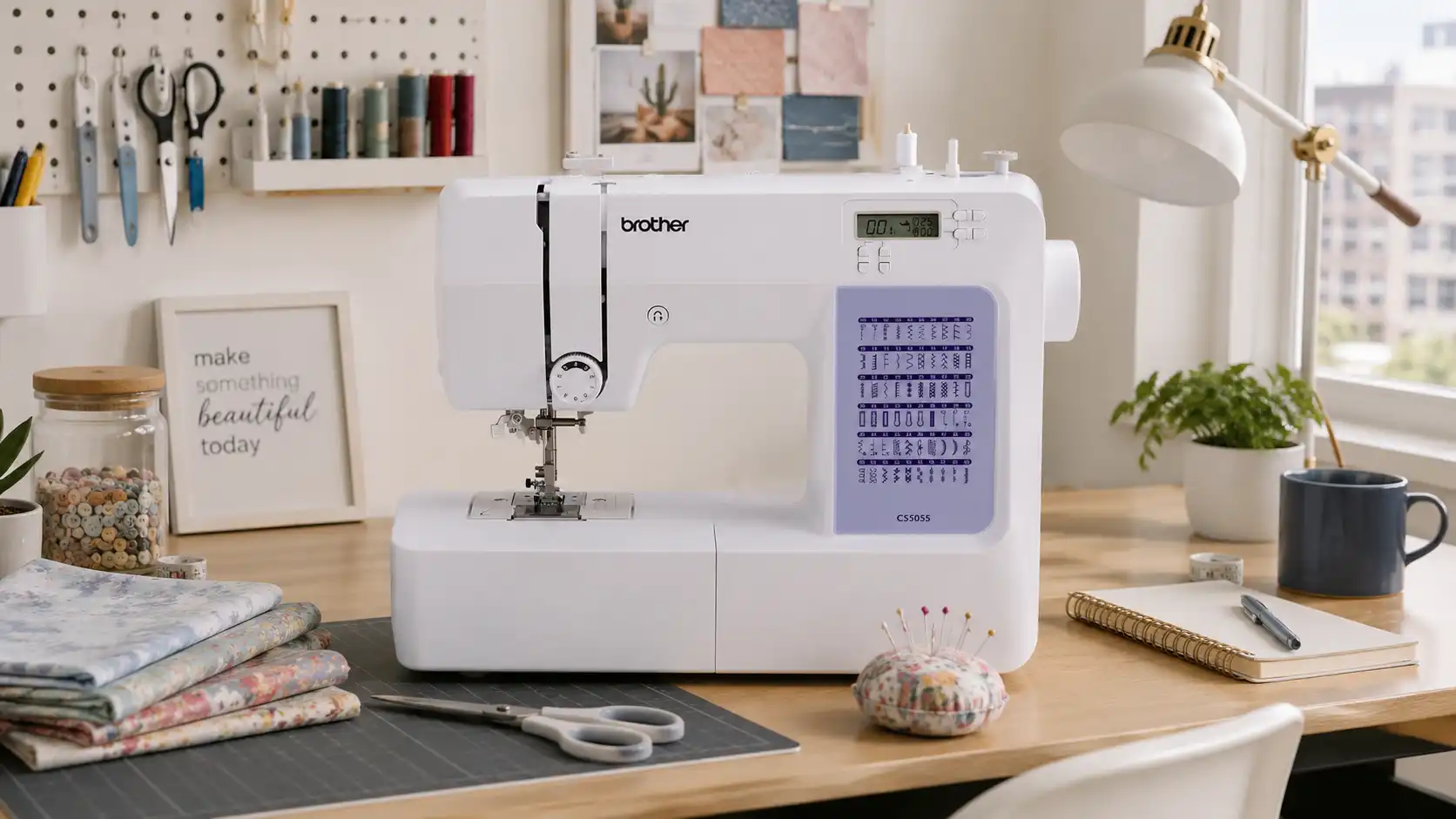
The Brother CS5055 is a more basic computerized domestic machine with 60 built-in stitches and seven one-step buttonhole styles. Brother’s US site lists it at $169.99 as of October 14, 2026, although prices change. The CS7000X adds 10 stitches, a wide table, and a quilting-oriented accessory package.
| Feature | Brother CS7000X | Brother CS5055 |
| Built-in stitches | 70 | 60 |
| One-step buttonhole styles | 7 | 7 |
| Automatic needle threading | Yes | Yes |
| Maximum sewing speed | 750 stitches per minute | 750 stitches per minute |
| Adjustable sewing-speed slider | Yes | Not listed on Brother’s page |
| Adjustable presser-foot pressure | No | No |
| Wide extension table | Included | Not included |
| Included presser feet | 10 (including walking, quarter-inch, and quilting feet), plus a quilt guide | 7 (zigzag, buttonhole, zipper, button sewing, overcasting, blind stitch, monogramming) |
| Hard protective cover | Included | Not listed in the package contents |
| Warranty (Brother US) | 25-year limited | 25-year limited |
| Deciding factor | Quilting accessories and wide table | Lower price for everyday sewing |
The deciding factor comes down to quilting. If you’ll use the walking foot, quarter-inch foot, quilting foot, and wide table, the CS7000X’s extra cost is easier to justify. If you won’t, the CS5055 covers everyday sewing for less.
My recommendation: The CS5055 deserves consideration if you mainly sew clothing, perform alterations, and want to spend less. The CS7000X is more compelling if the included quilting accessories will save you money and effort.
Brother CS7000X vs. Singer Heavy Duty 4423
These machines address somewhat different priorities. The Brother CS7000X focuses on computerized stitch selection, convenience features, and versatility for home sewing and quilting. The Singer Heavy Duty 4423 is a mechanical machine marketed toward people who want a more speed-oriented domestic sewing setup. Don’t choose between them based only on stitch count or a heavy-duty label.
| Consideration | Brother CS7000X | Singer Heavy Duty 4423 |
| Controls | Computerized | Mechanical |
| Stitch selection | 70 built-in stitches | More limited selection |
| Speed control | Adjustable slider plus foot control | Foot control |
| Quilting accessories | Wide table and quilting feet included | Check the package and available accessories |
| Best fit | Versatile home sewing and quilting | Straightforward sewing and suitable heavier-fabric tasks |
| Main consideration | Fixed presser-foot pressure and limited throat space | Fewer computerized conveniences and stitch options |
Exact performance depends on the material and setup. Neither machine should be treated as an industrial substitute.
My recommendation: Choose the CS7000X for computerized convenience and a stronger out-of-the-box quilting package. Consider the Singer 4423 if you prefer mechanical controls and prioritize straightforward sewing, including suitable heavier fabrics.
Who Should Buy the Brother CS7000X, and Who Should Look Elsewhere?
Here’s the short version. Buy the CS7000X if you want one computerized machine for everyday sewing, simple garments, alterations, patchwork, and smaller quilts, and you’d like the quilting accessories included rather than bought separately. Look elsewhere if your needs are more specialized.
| If you are… | Consider | Why |
| A beginner or hobbyist who wants to try quilting | Brother CS7000X | Walking foot, quarter-inch foot, quilting foot, quilt guide, and wide table are in the box. |
| Sewing on a tighter budget | Brother CS5055 | Computerized features for less, without the quilting package. |
| Someone who prefers mechanical controls or sews heavier fabrics often | Singer Heavy Duty 4423 | Straightforward controls; see our Singer Heavy Duty 4423 review. |
| Planning to make bed-size quilts | A machine with more workspace | See our guide to the best sewing machines for quilting. |
| Looking for machine embroidery | A dedicated embroidery machine | See our guide to the best embroidery machines. |
| Someone who needs clean buttonholes above all | A machine with stronger buttonhole results | TechGearLab pointed to the Singer 7258 Stylist as one of the best at consistent buttonholes. |
Is the Brother CS7000X Easy for Beginners?
It’s one of the strongest reasons to consider this machine. The automatic needle threader, Quick-Set bobbin, and speed slider (all covered above) remove the three most common first-week frustrations. TechGearLab’s independent test rated its ease of use 9.2 out of 10 and called the stitch selection one of the easiest it had seen, thanks to separate forward and backward buttons that make it hard to overshoot the stitch number you want.
Sewing Machine Fun’s owner review also points to the machine’s built-in guidance: it suggests the presser foot for each stitch and shows prompts that help prevent beginner mistakes, such as a reminder when the presser foot is still up. However, computerized doesn’t mean effortless. You still need to learn how to select the correct stitch, choose a suitable needle, adjust thread tension when necessary, and recognize when the machine isn’t feeding fabric correctly.
I recommend starting with simple straight seams, then practicing curves, corners, zigzag stitches, and buttonholes on scrap fabric. Once you’re comfortable, move on to garments and quilting projects. If you’re buying your first machine, our guide to the best sewing machines for beginners provides additional buying advice.
How to Set Up and Maintain the Brother CS7000X
Even a good sewing machine can produce disappointing results if it’s threaded incorrectly or used with an unsuitable needle. A few habits can prevent many common problems.
1. Read the Quick-Start Instructions
Before your first project, familiarize yourself with the threading path, bobbin insertion, presser-foot controls, stitch selector, and speed slider. Keep the manual nearby until you can complete these steps comfortably.
2. Choose the Right Needle
Use a needle appropriate for your material. Lightweight fabrics, stretch fabrics, and denim generally need different needle choices. A dull or damaged needle can cause skipped stitches, thread breakage, or fabric damage.
3. Test the Stitch Before Sewing
Use a scrap of the same fabric and, when appropriate, the same number of layers as your actual project. Check the stitch appearance, tension, fabric feeding, and seam allowance before committing to the finished piece. For buttonholes, test the complete process with the same fabric and interfacing you’ll use in the garment.
4. Keep the Machine Clean
Lint can accumulate around the bobbin area and interfere with smooth operation. Follow the manufacturer’s cleaning instructions and use the correct brush and tools. Don’t apply oil unless the manual specifically instructs you to do so.
Our guide on how to oil a sewing machine explains why maintenance instructions differ between models.
5. Don’t Force Thick Fabric
If you encounter a bulky seam, slow down and assess the needle, stitch settings, and fabric arrangement. Pulling or forcing the material can bend the needle and damage the work. If the machine can’t handle the project comfortably, consider whether a different machine is more suitable.
Troubleshooting Common Problems
These are general troubleshooting suggestions, not a claim that every symptom is a known defect of the CS7000X. For model-specific procedures, follow the official manual.
| Symptom | What to check |
| Thread bunching underneath | Rethread the upper thread and check bobbin insertion. |
| Skipped stitches | Check needle condition, needle type, and threading. |
| Fabric puckering | Check the needle, thread tension, stitch settings, and fabric suitability. |
| Poor buttonholes | Test settings and interfacing on a fabric scrap. |
| Difficulty feeding thick seams | Check needle suitability and avoid forcing the material. |
Is the Brother CS7000X Suitable for a Small Sewing Space?
Brother lists the machine at approximately 10.5 lb, with dimensions of 12.2 by 6.65 by 16.26 inches. The wide table is detachable, and the machine comes with a hard protective cover that Brother says is meant for portability and class use.
Those figures come from Brother’s published specifications rather than a portability test, so weigh them against how and where you plan to store and carry the machine. One long-term owner’s experience is worth knowing: Sewing Machine Fun’s owner review couldn’t get the cover to lock into place, so she treats it as a dust cover rather than a carrying case. She also notes that her older CS6000i came with an accessories pouch and her CS7000X didn’t, so she keeps the feet in a small bag in the front compartment.
What Should You Check Before Buying the Brother CS7000X?
Before purchasing, consider more than the advertised price.
Check the seller. Confirm whether the machine is new, refurbished, or used. For a used machine, ask whether it has been serviced and whether all essential accessories are included.
Compare the complete package. The wide table and quilting accessories can add value, but verify that the specific listing includes them.
Think about ownership costs. The box includes a needle set, ball point needle, twin needle, three bobbins, and basic tools, so you can start sewing right away. Depending on your projects, you may still want extra needles in the right types and sizes (denim, jersey, quilting), more bobbins, good thread, and sharp scissors or thread snips. Any additional specialty feet would be an added cost, so check compatibility first.
Review the warranty. Brother lists a 25-year limited warranty for the US model. This is not the same as a blanket 25-year guarantee covering every part, labor cost, or type of damage. Brother’s US warranty statements split coverage by component, and the periods differ between versions: the one I found lists 1 year for the machine, 5 years for circuit boards, and 25 years for the chassis, while retailers and owners often cite 1, 2, and 25 years. Read the statement that applies to your machine and confirm eligibility.
Consider your future projects. If you’re planning to move from occasional sewing into regular garment construction or large quilts, make sure the workspace and fabric controls will keep meeting your needs.
Compare current prices. Brother’s direct price is only one reference point. Check reputable sellers, shipping costs, return policies, and the total cost of any accessories you may still need.
Frequently Asked Questions
Is the Brother CS7000X sewing machine worth buying?
For many home sewists, yes. It combines computerized controls, 70 stitches, an automatic needle threader, speed control, and useful quilting accessories. It’s less suitable for frequent demanding heavy-fabric work or sewists who need adjustable presser-foot pressure.
Is the Brother CS7000X good for beginners?
Yes. Its automatic needle threader, Quick-Set bobbin, speed slider, and computerized stitch selection can make learning easier. Beginners still need to practice threading, needle selection, tension, and fabric handling.
Can the Brother CS7000X sew thick fabric?
It can handle many ordinary projects involving denim and other moderately thick materials, depending on the fabric, needle, and number of layers. TechGearLab’s tested unit sewed eight layers of 12-ounce denim with no struggles. Frequent heavy canvas, upholstery, or very bulky seams are more demanding, so consider a machine built for that workload.
Can the Brother CS7000X quilt?
Yes. It includes a wide table, a walking foot, a quarter-inch foot, a quilting foot, and a quilt guide, and it supports free-motion quilting. It’s particularly suitable for patchwork and smaller home quilting projects.
Does the Brother CS7000X have a thread cutter?
It has a built-in manual thread cutter on the left side, but no automatic thread-cutting function. You’ll need to pull the threads to the cutter or use scissors after each seam.
Does the Brother CS7000X have adjustable presser-foot pressure?
No. Brother’s published specifications list adjustable presser-foot pressure as unavailable on this model.
Can the Brother CS7000X embroider designs?
It can sew decorative stitches, but it isn’t a dedicated computerized embroidery machine. It doesn’t have an embroidery unit or built-in lettering fonts for stitching out imported embroidery designs.
How many stitches does the Brother CS7000X have?
It has 70 built-in stitches, including utility, decorative, and quilting stitches, plus seven styles of one-step buttonholes.
Is the Brother CS7000X suitable for making clothes?
Yes. It’s suitable for many home garment projects, including shirts, dresses, skirts, and everyday alterations. Choose appropriate needles and stitches for your fabric, and test buttonholes before sewing the finished garment.
How much does the Brother CS7000X cost?
Brother’s official US website currently lists the CS7000X at $249.99, reduced from its displayed original price of $279.99 (checked October 14, 2026). Prices and promotions can change, so check the current listing before buying.
Does the Brother CS7000X come with a warranty?
Brother lists a 25-year limited warranty for the US model, but the long period applies to the chassis. Shorter periods cover the rest of the machine and the circuit boards, and the exact terms differ between versions of Brother’s statement, so read the one that applies to your machine. Purchases outside the US may have different warranty arrangements.
Is the Brother CS7000X portable?
Brother lists it at approximately 10.5 lb and includes a hard protective cover and a detachable wide table. One long-term owner reports that the cover doesn’t lock on, so plan on a dust cover rather than a latching case. See the small sewing space section above for the details.
Is the Brother CS7000X better than the Singer Heavy Duty 4423?
Neither is automatically better. The Brother is a strong option for computerized convenience, stitch variety, and included quilting accessories. The Singer may appeal to buyers who prefer mechanical controls and a straightforward sewing setup. Choose according to your main projects rather than the brand or product label alone.
Final Verdict: Should You Buy the Brother CS7000X?
The Brother CS7000X sewing machine makes the most sense when you want one versatile domestic machine for everyday sewing, clothing projects, alterations, crafts, and smaller quilts. Its combination of computerized stitch selection, speed control, automatic needle threading, and included quilting accessories gives you useful features without requiring you to buy a specialist machine for every task.
The trade-offs matter, though. The screen isn’t backlit, presser-foot pressure isn’t adjustable, threads have to be trimmed manually, and buttonholes can be uneven on some fabrics. Occasional denim and thick-fabric projects are within reach, but if you sew heavy materials regularly or need more advanced fabric controls, compare other machines before committing. If bed-size quilts are your main goal, start with machines that offer more workspace.
I’d shortlist the Brother CS7000X if I wanted a versatile home sewing machine with quilting accessories included. I’d look elsewhere if frequent heavy-canvas work, large quilts, or advanced garment-sewing control were my main priorities.
Before buying, think about the projects you sew most often, check the current package and warranty, and compare the CS7000X with machines in the same price range.
The best sewing machine isn’t the one with the longest feature list. It’s the one that helps you finish your projects with fewer frustrations and gives you room to improve.
Ready to compare your options? Explore our guide to the best sewing machines to see how the Brother CS7000X fits into the wider market.